

Household Hazardous Waste
What is it?
A product is hazardous if it has one or more of these properties:
Toxic — substances that may be poisonous even in small quantities and cause injury or death when swallowed, absorbed through the skin, or inhaled into the lungs  | Flammable — substances, usually liquids, which can readily ignite (burn in the air) in a wide range of temperature conditions.  |
Corrosive — substances or vapours that can destroy or eat away the surface of another material. 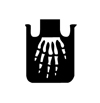 | Reactive/Explosive — substances that can react with air, water or another substance to produce toxic vapours or explode. 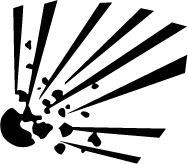 |
What is the issue?
Hazardous products in your home and garages typically include batteries, cleaners, paint thinners, aerosols and pesticides. Products and packages that carry a hazardous symbol can cause air, water and land pollution, as well as being harmful to humans and animals. For example, batteries can contain cadmium, lead, mercury, copper, zinc, manganese, lithium, or potassium, which are all hazardous. Improper battery disposal can, depending on chemistry, lead to leaking acid, fires, and small explosions.
Where can it go?
In 2020, provincial legislation was passed to regulate household hazardous materials. Product Care Recycling is the stewardship organizations responsible for the safe disposal of the materials listed in the regulation, except for batteries. The program is funded by an Environmental Handling Fee (EHF) that is charged when the product is purchased. Product Care is working on building a collection network to service the whole province. Currently, some communities set up Household Hazardous Waste Days (HHW days), often once a year, which allow their residents to get rid of hazardous materials in a safe and environmentally responsible way. Certain landfills and independent businesses also accept some hazardous products. Please check out our Waste Reduction Hub for locations and HHW depots or events near you.
Call2Recycle recycles rechargeable and single-use batteries up to 5kg in size. This program is also funded through Environmental Handling Fees (EHF) that are applied on the sale of these new batteries. Saskatchewan residents can drop off batteries for recycling at any SARCAN depot, at many retail stores and municipal sites. Collected items are then shipped to Call2Recycle’s recycling partners. Check here to find the location nearest you.
For vehicle batteries, the Canadian Battery Association is a voluntary, national stewardship program. The program recycles all parts of the battery including the metal, electrolytes, and plastics and sells the resulting products as commodities on the market. Most scrap metal dealers, landfills, transfer stations, and businesses that sell automotive batteries take them back for recycling. Check out our Waste Reduction Hub to find a drop-off location near you.
What happens after?
HHW products are dealt with in various ways. Each class of product requires a specific treatment that will destroy it, render it non-hazardous, recycle it, or otherwise keep it out of the environment. Some, like batteries, propane cylinders, solvents, fuels, and some mercury-containing products (e.g. fluorescent light bulbs, thermometers, etc.), can be recycled. Poisons, pharmaceuticals, and PCBs are incinerated in specialized facilities. Corrosives are neutralized. Adhesives, cleaners, and some oxidizers are subject to physical or chemical treatment.
How can I reduce?
- Buy the smallest container that you need and give away the extras to friends.
- Chose non-toxic alternatives to hazardous products.
- Use rechargeable batteries instead of disposable ones.
- LED bulbs are a mercury-free alternative to fluorescents, while being extremely long-lasting & energy efficient.
- When buying things like light bulbs, batteries, thermometers, etc., select a mercury-free option.